Français
 Español
 English
 العربية
 Login
Login
 Donate













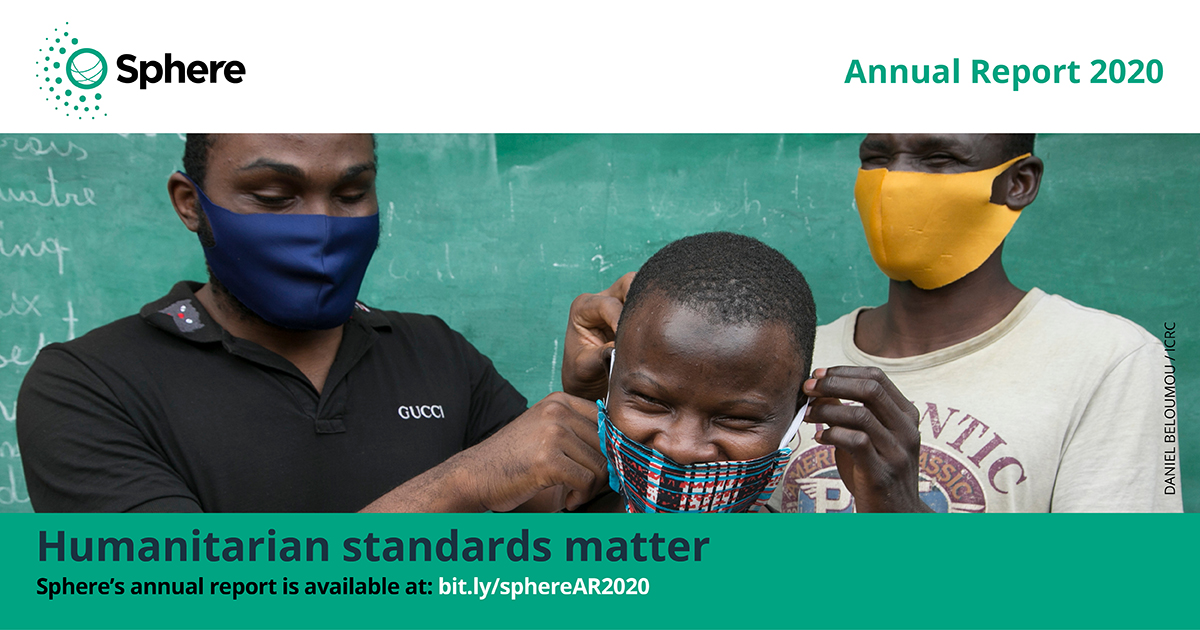
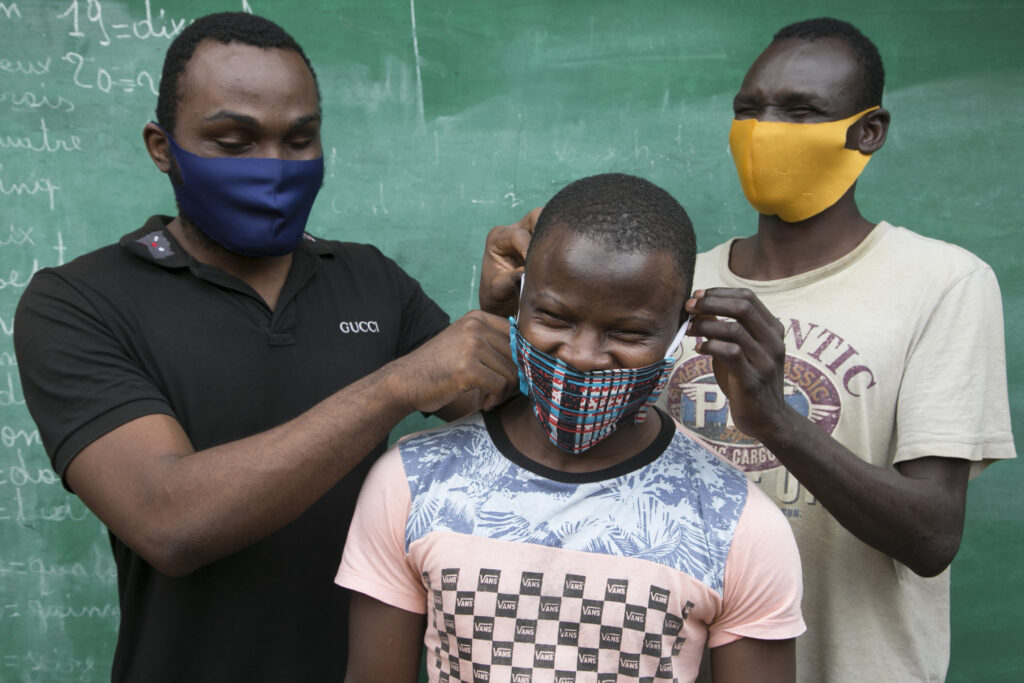
In the midst of a pandemic, the past year was a challenge for many organisations. Sphere stepped up its efforts to convene and share expertise and further promote the application of humanitarian standards, through our global community.
Whilst Sphere has continued to build its online presence over the past 3 years, the challenges in 2020 accelerated the expansion of its online offerings, including training packages and the launch of a new function enabling users to submit comments to the Sphere Handbook digitally.
With webinars and online events becoming important means to promote global uptake and the impact of humanitarian standards, Sphere invested considerably in accessibility – translation of resources, simultaneous interpretation, sign language interpretation and live captions. Adequate resourcing of accessibility must be a priority for humanitarian organisations and donors, to ensure that the most vulnerable and marginalised are not further marginalised and disadvantaged.
Our engagement with the Sphere community was more frequent in 2020, reached more members, focal points and humanitarian practitioners, including those in the global South, and contributed to a greater sense of connectedness.
2020 highlights
- Global network of 100,000 subscribers, 44 organisational and 60 individual members.
- 57 focal points across 49 countries.
- Global community of 116 trainers.
- Sphere Handbook 2018 available in 9 languages.
- New guidance on urban contexts and disaster risk reduction.
- 7 webinars on humanitarian standards in the COVID-19 response, with 1,467 participants.
- 7 HSP handbooks available on interactive platform.
- Pilot of ‘Sphere in Practice’ Massive Open Online Course (MOOC) tested.