 Français
 Español
 English
 العربية
 Login
Login
 Donate














Online Courses
Browse Sphere’s online resources
Learn about Sphere and related topics using your computer or mobile device with these e-learning courses, videos, webinars and other self-study and distance-learning resources.
Sphere E-learning Courses
pThese courses can be accessed via Kaya. They have been created by Sphere and are focused on Sphere topics.
-
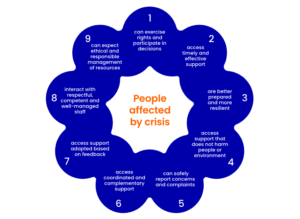 Sphere e-learning courses
Introduction to the Core Humanitarian Standard on Quality and Accountability
Introduction to the Core Humanitarian Standard on Quality and Accountability
By Sphere, CHS Alliance and Groupe URD
This course will help you understand and apply the Core Humanitarian Standard on Quality and Accountability (CHS), and in doing so ensure that organisations support people and communities affected by crisis and vulnerability in ways that respect their rights and dignity and promote their primary role in finding solutions to the crises they face.
This course is available in English, French, Spanish and Arabic.
-
Nature-based Solutions for Humanitarians
By Sphere
After completing this course, you will be able to:- explain the connections between climate change and humanitarian crises;
- describe what Nature-based Solutions (NbS) are and the role they play in humanitarian action;
- use the Sphere Unpacked Guide: Nature-based Solutions for Climate Resilience in Humanitarian Action; and
- identify ways to integrate NbS into your own work to improve outcomes for human well-being and environmental protection.
-
How to use the Sphere Handbook
By Sphere
After completing this course, you will be able to:- describe the Sphere Approach to humanitarian assistance;
- summarise the contents of the Sphere Handbook;
- apply minimum standards, indicators and guidance notes to challenges encountered by humanitarians;
- reflect on how to use the Handbook to better assist people affected by crises; and
- list sources of additional information to help you use the Handbook.
-
Sphere in Practice
By Sphere
Do you want to know how to put Sphere standards and principles into practice? Do you already include Sphere in your humanitarian work but want to know how to use it better? Do you already know Sphere but want to discover how it is applied in different crises and scenarios? Are you new to humanitarian work, and so have little or no knowledge of Sphere? Are you interested in finding out more about Sphere?
If your answer to any of these questions is ”yes”, then you will benefit from taking this course.
This course is available in English, French, Spanish and Arabic.
-
How to be a Sphere Champion
By Sphere
Learn how to promote Sphere within your network, and how this benefits the people affected by crisis and disaster that you serve. By the end of the module, you will be able to explain:- the Sphere Approach to humanitarian response;
- The usefulness of the Sphere Handbook to prepare, manage and coordinate humanitarian relief efforts;
- the benefits of using the Sphere Handbook to fulfil a commitment to quality and accountability; and
- the first steps to advocating for Sphere within your network.
3rd Party Sphere Courses
These courses are focused on Sphere and are provided by our network of focal points and partners around the world.
-
 3rd party Sphere courses
Using Sphere Minimum Standards in Health
Using Sphere Minimum Standards in Health
By Community World Service Asia (CWSA)
This comprehensive online course delves into the Health Section of the Sphere Handbook. It is designed to equip you with essential knowledge and skills in humanitarian health response. Through a series of eleven engaging sessions, the course covers critical topics such as healthcare delivery, disease prevention, mental health support, and nutrition in crisis settings.
-
 3rd party Sphere courses
人道主义宪章与人道救援响应最低标准:环球计划的实践
By Collaborating Centre for Oxford University and CUHK for Disaster and Medical Humanitarian Response (CCOUC)
人道主义宪章与人道救援响应最低标准:环球计划的实践
By Collaborating Centre for Oxford University and CUHK for Disaster and Medical Humanitarian Response (CCOUC)
Humanitarian Charter and Minimum Standards in Humanitarian Response: The Application of Sphere Standards is a free video-based online course offered by The Collaborating Centre for Oxford University and CUHK for Disaster and Medical Humanitarian Response (CCOUC) at The Chinese University of Hong Kong. Organized in five lessons, the course systematically explains the main contents and practice of Sphere, including an introduction to the Sphere organisation; the origins and core beliefs of Sphere; the Humanitarian Charter; Protection Principles; the Core Humanitarian Standard (CHS); and the technical chapters as presented in the 2018 edition of the Sphere Handbook.
Humanitarian Standards Partnership (HSP) Resources
The following on-line learning resources are provided by Sphere’s partners in the HSP and can be used to deepen your knowledge in the technical areas of child protection (CPMS), livestock (LEGS), economic recovery (MERS), education (INEE), market analysis (MISMA) and inclusion of older people and people with disabilities (ADCAP) in relation to humanitarian action.
-
 Humanitarian Standards Partnership (HSP) learning resources
LEGS Core Training Refresher Course
By LEGS
LEGS Core Training Refresher Course
By LEGS
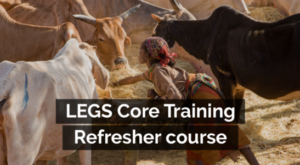
The LEGS Core Training Refresher Course reviews the LEGS approach. This course will support your understanding in how to use LEGS in assessment and response identification as well as how to use the LEGS approach in response planning.
-
 Humanitarian Standards Partnership (HSP) learning resources
Introduction to the Minimum Standards for Camp Management
Introduction to the Minimum Standards for Camp Management
By CCCM Cluster – Camp Management Working Group
This introductory e-course is for anyone currently working with and for children in humanitarian settings, as well as all child protection workers who want to prepare themselves for a potential humanitarian crisis.
-
 Humanitarian Standards Partnership (HSP) learning resources
Child Protection Minimum Standards (CPMS) Introductory eCourse
By The Alliance
Child Protection Minimum Standards (CPMS) Introductory eCourse
By The Alliance
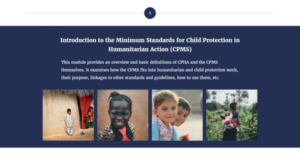
Learn about the Minimum Standards for Child Protection in Humanitarian Action (CPMS) and how they can be applied in practice. Updated in 2021, this is a free, self-guided online course. It offers more than 10 learning modules introducing the CPMS, its principles and specific child protection standards. On finishing the core components, you may download and/or print a certificate of completion.
-
 Humanitarian Standards Partnership (HSP) learning resources
Child Protection Minimum Standards – Standards to Work Across Sectors
By The Alliance
Child Protection Minimum Standards – Standards to Work Across Sectors
By The Alliance
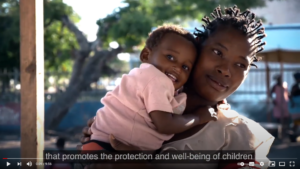
Made for all humanitarians, this video focuses on the Minimum Standards for Child Protection in Humanitarian Action – Standards to Work Across Sectors for preventing and responding to the protection risks children face. By taking a holistic and multi-sectoral approach, we can achieve our collective responsibility to uphold the Centrality of Protection, and build stronger, more effective programmes that improve outcomes for every child.
Visit the Alliance for Child Protection in Humanitarian Action’s YouTube channel for this and other great training videos: https://www.youtube.com/c/TheAllianceCPHA
-
 Humanitarian Standards Partnership (HSP) learning resources
Introducing the 2019 Edition of the Child Protection Minimum Standards
By The Alliance
Introducing the 2019 Edition of the Child Protection Minimum Standards
By The Alliance
The Minimum Standards for Child Protection in Humanitarian Action (CPMS) set out common principles and critical actions to keep children safe from abuse, neglect, exploitation and violence — and to holistically support their well-being. They provide important guidance and standards for all humanitarians, including through the standards to work across sectors.
Visit the Alliance for Child Protection in Humanitarian Action’s YouTube channel for this and other great training videos: https://www.youtube.com/c/TheAllianceCPHA
-
 Humanitarian Standards Partnership (HSP) learning resources
A Practical Guide to Market Analysis
By CaLP
A Practical Guide to Market Analysis
By CaLP
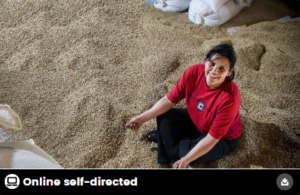
An online self-study course to develop a good conceptual understanding of the steps involved in market assessments and basic skills in how to apply this understanding in real-life settings.
This 3.5 hour online course is designed to provide future humanitarian market assessment team members with a solid understanding of the theory and steps of market assessments so that they can join assessment teams prepared with a basic understanding of what they will be doing and why. Learners will be guided through the common steps within market assessments, using a fictional emergency scenario as a basis. This course is relevant to most types of emergency market assessment, including EMMA, RAM, MAG, the 48-Hour Tool, the WFP VAM and PCMA.
This course is aimed at humanitarian workers with an understanding of market assessments. After completing the course participants will have gained a solid understanding of the theory and steps of market assessments.
Visit the Cash Learning Hub (free Kaya login required) for more learning resources: https://kayaconnect.org/course/view.php?id=491 -
 Humanitarian Standards Partnership (HSP) learning resources
A Brief Overview of the Minimum Economic Recovery Standards
By SEEP Network
A Brief Overview of the Minimum Economic Recovery Standards
By SEEP Network
The Minimum Economic Recovery Standards, or the MERS, are internationally recognised standards aimed at enhancing the effectiveness and quality of economic aid for markets in crisis.
What does this mean? Watch this 3-minute video to find out.
Visit the SEEP Network’s Vimeo channel for more videos: https://vimeo.com/theseepnetwork -
 Humanitarian Standards Partnership (HSP) learning resources
Basic Principles of Disability Inclusion in Humanitarian Response
Basic Principles of Disability Inclusion in Humanitarian Response
Select this e-learning to learn how to:- define disability, impairment and root causes;
- identify the models of disability, from charity to the human rights-based model;
- define the categories of impairments;
- explain the challenges faced by older people and people with disabilities in humanitarian contexts, and factors increasing their vulnerability;
- define older age and the perceptions of ageing and attitudes towards older people; and
- improve attitudes towards people with disabilities.
-
 Humanitarian Standards Partnership (HSP) learning resources
Livestock Emergency Guidelines and Standards (LEGS) Gender Module
By LEGS
Livestock Emergency Guidelines and Standards (LEGS) Gender Module
By LEGS
Select this e-learning if you’d like to:- learn about gender issues in planning and implementing livestock-based emergency responses;
- get insights into gender analysis; and
- discover some practical tools to support these processes.
Other Partner Courses
Sphere contributed to the development of the following courses, which are based on Sphere content, or closely related to it.
-
Being Accountable to Affected People
By The Academy
After completing this course, you will be able to:- define “accountability to affected people” and identify steps that can be taken to improve accountability to affected people;
- explain “taking account”, “giving account” and “being held to account”;
- identify why it is important to be accountable to affected people; and
- explain what accountability to affected people means in practice, related to real-life actions across the programme cycle.
Browse all Online Courses
-
Sphere e-learning courses sphere-e-learning-courses 2024 arabic-en,english,french,spanish
Introduction to the Core Humanitarian Standard on Quality and Accountability
Introduction to the Core Humanitarian Standard on Quality and Accountability
By Sphere, CHS Alliance and Groupe URD
This course will help you understand and apply the Core Humanitarian Standard on Quality and Accountability (CHS), and in doing so ensure that organisations support people and communities affected by crisis and vulnerability in ways that respect their rights and dignity and promote their primary role in finding solutions to the crises they face.
This course is available in English, French, Spanish and Arabic.
-
3rd party Sphere courses 3rd-party-sphere-courses 2024 english-urdu
Using Sphere Minimum Standards in Health
Using Sphere Minimum Standards in Health
By Community World Service Asia (CWSA)
This comprehensive online course delves into the Health Section of the Sphere Handbook. It is designed to equip you with essential knowledge and skills in humanitarian health response. Through a series of eleven engaging sessions, the course covers critical topics such as healthcare delivery, disease prevention, mental health support, and nutrition in crisis settings.
-
Sphere e-learning courses sphere-e-learning-courses 2024 english
Nature-based Solutions for Humanitarians
By Sphere
Nature-based Solutions for Humanitarians
By Sphere
After completing this course, you will be able to:- explain the connections between climate change and humanitarian crises;
- describe what Nature-based Solutions (NbS) are and the role they play in humanitarian action;
- use the Sphere Unpacked Guide: Nature-based Solutions for Climate Resilience in Humanitarian Action; and
- identify ways to integrate NbS into your own work to improve outcomes for human well-being and environmental protection.
-
Humanitarian Standards Partnership (HSP) learning resources humanitarian-standards-partnership 2023 english
LEGS Core Training Refresher Course
By LEGS
LEGS Core Training Refresher Course
By LEGS
The LEGS Core Training Refresher Course reviews the LEGS approach. This course will support your understanding in how to use LEGS in assessment and response identification as well as how to use the LEGS approach in response planning.
-
Sphere e-learning courses sphere-e-learning-courses 2023 english,french,spanish,ukrainian
How to use the Sphere Handbook
By Sphere
How to use the Sphere Handbook
By Sphere
After completing this course, you will be able to:- describe the Sphere Approach to humanitarian assistance;
- summarise the contents of the Sphere Handbook;
- apply minimum standards, indicators and guidance notes to challenges encountered by humanitarians;
- reflect on how to use the Handbook to better assist people affected by crises; and
- list sources of additional information to help you use the Handbook.
-
Humanitarian Standards Partnership (HSP) learning resources humanitarian-standards-partnership 2023 english
Introduction to the Minimum Standards for Camp Management
Introduction to the Minimum Standards for Camp Management
By CCCM Cluster – Camp Management Working Group
This introductory e-course is for anyone currently working with and for children in humanitarian settings, as well as all child protection workers who want to prepare themselves for a potential humanitarian crisis.
-
Humanitarian Standards Partnership (HSP) learning resources humanitarian-standards-partnership 2021 english
Child Protection Minimum Standards (CPMS) Introductory eCourse
By The Alliance
Child Protection Minimum Standards (CPMS) Introductory eCourse
By The Alliance
Learn about the Minimum Standards for Child Protection in Humanitarian Action (CPMS) and how they can be applied in practice. Updated in 2021, this is a free, self-guided online course. It offers more than 10 learning modules introducing the CPMS, its principles and specific child protection standards. On finishing the core components, you may download and/or print a certificate of completion.
-
Humanitarian Standards Partnership (HSP) learning resources humanitarian-standards-partnership 2021 arabic-en,english,french,spanish
Child Protection Minimum Standards – Standards to Work Across Sectors
By The Alliance
Child Protection Minimum Standards – Standards to Work Across Sectors
By The Alliance
Made for all humanitarians, this video focuses on the Minimum Standards for Child Protection in Humanitarian Action – Standards to Work Across Sectors for preventing and responding to the protection risks children face. By taking a holistic and multi-sectoral approach, we can achieve our collective responsibility to uphold the Centrality of Protection, and build stronger, more effective programmes that improve outcomes for every child.
Visit the Alliance for Child Protection in Humanitarian Action’s YouTube channel for this and other great training videos: https://www.youtube.com/c/TheAllianceCPHA
-
Humanitarian Standards Partnership (HSP) learning resources humanitarian-standards-partnership 2019 arabic-en,english,french,spanish
Introducing the 2019 Edition of the Child Protection Minimum Standards
By The Alliance
Introducing the 2019 Edition of the Child Protection Minimum Standards
By The Alliance
The Minimum Standards for Child Protection in Humanitarian Action (CPMS) set out common principles and critical actions to keep children safe from abuse, neglect, exploitation and violence — and to holistically support their well-being. They provide important guidance and standards for all humanitarians, including through the standards to work across sectors.
Visit the Alliance for Child Protection in Humanitarian Action’s YouTube channel for this and other great training videos: https://www.youtube.com/c/TheAllianceCPHA
-
Sphere e-learning courses sphere-e-learning-courses 2021 arabic-en,english,french,spanish
Sphere in Practice
By Sphere
Sphere in Practice
By Sphere
Do you want to know how to put Sphere standards and principles into practice? Do you already include Sphere in your humanitarian work but want to know how to use it better? Do you already know Sphere but want to discover how it is applied in different crises and scenarios? Are you new to humanitarian work, and so have little or no knowledge of Sphere? Are you interested in finding out more about Sphere?
If your answer to any of these questions is ”yes”, then you will benefit from taking this course.
This course is available in English, French, Spanish and Arabic.
-
3rd party Sphere courses 3rd-party-sphere-courses 2020-fr chinese
人道主义宪章与人道救援响应最低标准:环球计划的实践
By Collaborating Centre for Oxford University and CUHK for Disaster and Medical Humanitarian Response (CCOUC)
人道主义宪章与人道救援响应最低标准:环球计划的实践
By Collaborating Centre for Oxford University and CUHK for Disaster and Medical Humanitarian Response (CCOUC)
Humanitarian Charter and Minimum Standards in Humanitarian Response: The Application of Sphere Standards is a free video-based online course offered by The Collaborating Centre for Oxford University and CUHK for Disaster and Medical Humanitarian Response (CCOUC) at The Chinese University of Hong Kong. Organized in five lessons, the course systematically explains the main contents and practice of Sphere, including an introduction to the Sphere organisation; the origins and core beliefs of Sphere; the Humanitarian Charter; Protection Principles; the Core Humanitarian Standard (CHS); and the technical chapters as presented in the 2018 edition of the Sphere Handbook.
-
Humanitarian Standards Partnership (HSP) learning resources humanitarian-standards-partnership 2016 arabic-en,english,french
A Practical Guide to Market Analysis
By CaLP
A Practical Guide to Market Analysis
By CaLP
An online self-study course to develop a good conceptual understanding of the steps involved in market assessments and basic skills in how to apply this understanding in real-life settings.
This 3.5 hour online course is designed to provide future humanitarian market assessment team members with a solid understanding of the theory and steps of market assessments so that they can join assessment teams prepared with a basic understanding of what they will be doing and why. Learners will be guided through the common steps within market assessments, using a fictional emergency scenario as a basis. This course is relevant to most types of emergency market assessment, including EMMA, RAM, MAG, the 48-Hour Tool, the WFP VAM and PCMA.
This course is aimed at humanitarian workers with an understanding of market assessments. After completing the course participants will have gained a solid understanding of the theory and steps of market assessments.
Visit the Cash Learning Hub (free Kaya login required) for more learning resources: https://kayaconnect.org/course/view.php?id=491 -
A Brief Overview of the Minimum Economic Recovery Standards
The Minimum Economic Recovery Standards, or the MERS, are internationally recognised standards aimed at enhancing the effectiveness and quality of economic aid for markets in crisis.
But what exactly does this mean? Watch this 3-minute video to find out.
Visit the SEEP Network’s Vimeo channel for more videos: https://vimeo.com/theseepnetwork -
Humanitarian Standards Partnership (HSP) learning resources humanitarian-standards-partnership 2019 english
A Brief Overview of the Minimum Economic Recovery Standards
By SEEP Network
A Brief Overview of the Minimum Economic Recovery Standards
By SEEP Network
The Minimum Economic Recovery Standards, or the MERS, are internationally recognised standards aimed at enhancing the effectiveness and quality of economic aid for markets in crisis.
What does this mean? Watch this 3-minute video to find out.
Visit the SEEP Network’s Vimeo channel for more videos: https://vimeo.com/theseepnetwork -
Other partner courses other-partner-courses 2018 english
Being Accountable to Affected People
By The Academy
Being Accountable to Affected People
By The Academy
After completing this course, you will be able to:- define “accountability to affected people” and identify steps that can be taken to improve accountability to affected people;
- explain “taking account”, “giving account” and “being held to account”;
- identify why it is important to be accountable to affected people; and
- explain what accountability to affected people means in practice, related to real-life actions across the programme cycle.
-
Humanitarian Standards Partnership (HSP) learning resources humanitarian-standards-partnership 2018 arabic-en,english
Basic Principles of Disability Inclusion in Humanitarian Response
Basic Principles of Disability Inclusion in Humanitarian Response
Select this e-learning to learn how to:- define disability, impairment and root causes;
- identify the models of disability, from charity to the human rights-based model;
- define the categories of impairments;
- explain the challenges faced by older people and people with disabilities in humanitarian contexts, and factors increasing their vulnerability;
- define older age and the perceptions of ageing and attitudes towards older people; and
- improve attitudes towards people with disabilities.
-
Humanitarian Standards Partnership (HSP) learning resources humanitarian-standards-partnership 2018 english
Livestock Emergency Guidelines and Standards (LEGS) Gender Module
By LEGS
Livestock Emergency Guidelines and Standards (LEGS) Gender Module
By LEGS
Select this e-learning if you’d like to:- learn about gender issues in planning and implementing livestock-based emergency responses;
- get insights into gender analysis; and
- discover some practical tools to support these processes.
-
 Humanitarian Standards Partnership (HSP) learning resources humanitarian-standards-partnership 2018 english,spanish
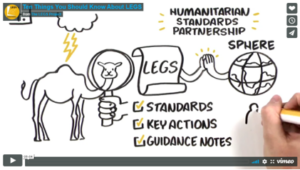
Ten Things You Should Know About LEGS
By LEGS
Ten Things You Should Know About LEGS
By LEGS
Watch this video if you’re looking for a quick and lively introduction to LEGS: what it is, where it came from and who it’s for.
-
Sphere e-learning courses sphere-e-learning-courses 2018 arabic-en,english,french,japanese,spanish
How to be a Sphere Champion
By Sphere
How to be a Sphere Champion
By Sphere
Learn how to promote Sphere within your network, and how this benefits the people affected by crisis and disaster that you serve. By the end of the module, you will be able to explain:- the Sphere Approach to humanitarian response;
- The usefulness of the Sphere Handbook to prepare, manage and coordinate humanitarian relief efforts;
- the benefits of using the Sphere Handbook to fulfil a commitment to quality and accountability; and
- the first steps to advocating for Sphere within your network.