Speaking the same language: Sphere Standards for more effective business engagement in emergency response
Sphere • October 15, 2025
Annik Tiedt, CBI Private Sector Coordination Specialist, and Zunaira Shams, Sphere Communications Manager
Imagine someone you love has been in a car accident. What would you expect from medical services? Speed. Professionalism. Trained personnel. Kindness. No mistakes. Now ask yourself: shouldn’t that same quality of care apply to people affected by disasters?
Felicity Fallon, Sphere’s Engagement Director opened a recent webinar with this question. It was an event co-hosted by Sphere and CBI on “Strengthening business engagement in humanitarian action through Sphere”. The session sought to answer the question: How can businesses engaging in humanitarian relief ensure their help actually helps?
The answer lies in understanding that good intentions alone aren’t enough. As climate change, conflict, and economic shocks reshape emergency response, the private sector has an increasingly vital role to play – not just as donors, but as equal partners contributing expertise, networks, and innovative solutions. But businesses need to know how to act effectively. That’s where Sphere standards come in: a set of practical guidelines that can be adapted to any context.
What is Sphere?
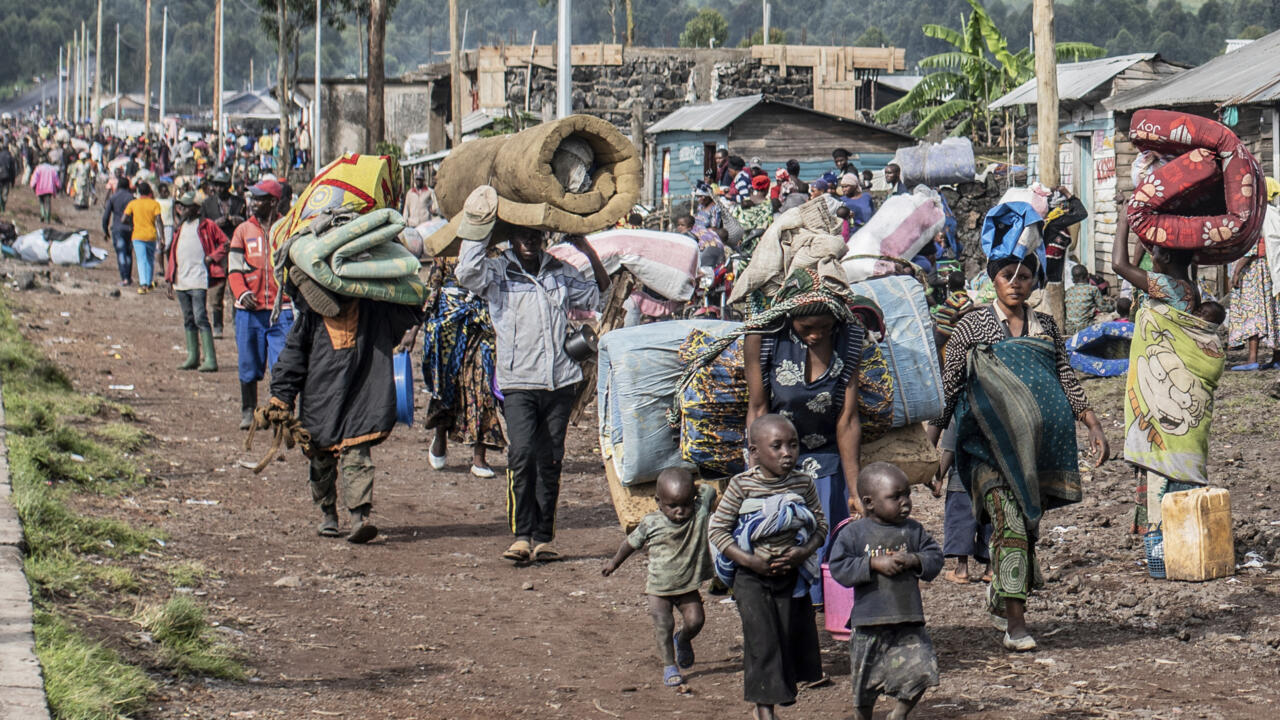
Sphere started with a tragedy. In 1994, Rwanda’s genocide triggered a massive humanitarian crisis. A million people fled to neighboring countries. Refugee camps swelled and then cholera struck.
In the aftermath, evaluators asked hard questions about improved coordination and how else we could do better as a collective. This led to a fundamental insight: the humanitarian sector needed shared quality standards so everyone – from UN agencies to local NGOs – would speak the same language.
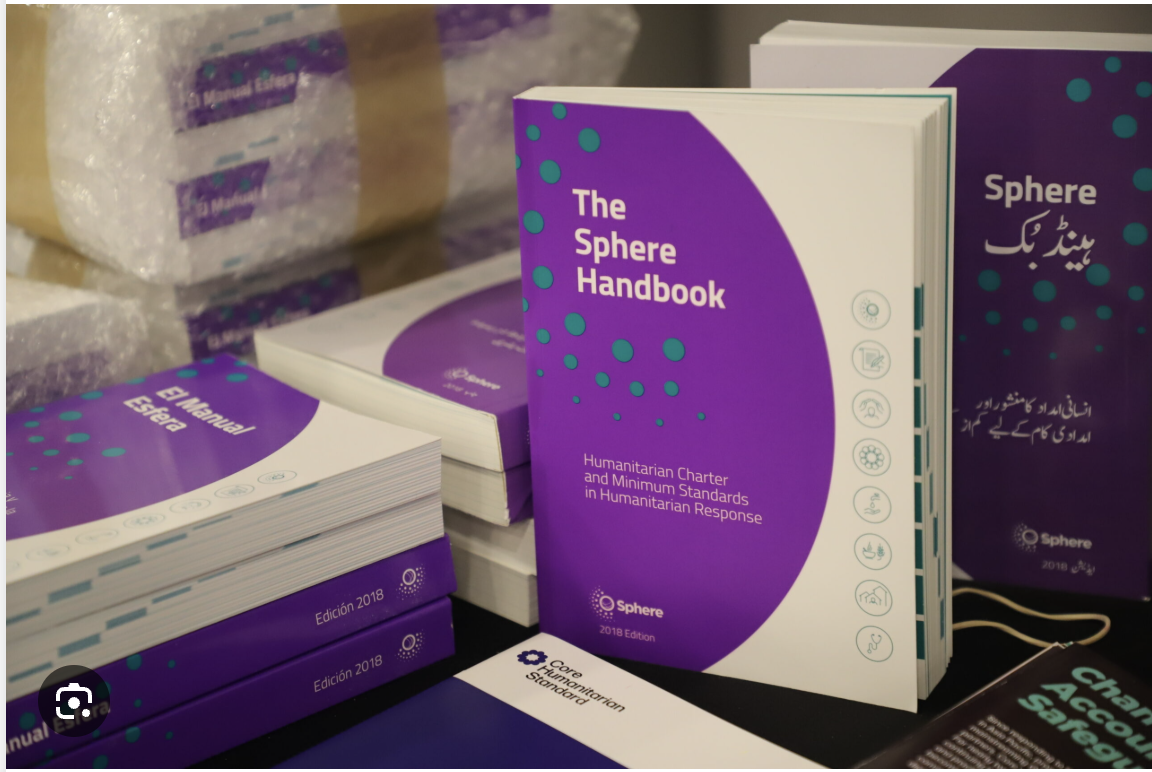
In 2000, the first Sphere Handbook was published. Ever since, Sphere has been building a global community around one idea: people affected by disasters deserve rapid, coordinated, professional care delivered with dignity.
Rooted in the Humanitarian Charter, the Sphere approach affirms the rights of crisis-affected people to life with dignity and to receive assistance. It translates these universal rights into concrete, measurable actions for responders – humanitarian or otherwise. Alongside the Core Humanitarian Standard and the Protection Principles, Sphere provides a practical framework to ensure that any actor delivering aid does so responsibly, transparently, and with respect for people’s safety and agency.
Think of Sphere as ISO standards for humanitarian relief – practical benchmarks covering everything from water quantities to protection protocols. Sphere standards address four core areas:
Each standard comes with specific indicators like liters of water per day per person, kilocalories needed per meal for adults and children, or vaccination rates – that help responders know whether they’re meeting minimum requirements.
Why humanitarian standards are relevant for businesses: Examples from Sri Lanka
For Firzan Hashim, Country Director of the Asia Pacific Alliance for Disaster Management Sri Lanka (A-PAD Sri Lanka), a CBI Member Network, Sphere standards transformed how his network engages businesses in humanitarian response. In the years following Sri Lanka’s civil war, the Menik Farm in northern Sri Lanka, one of the world’s largest camps for internally displaced persons (IDPs) needed solutions for safe water access.
A private water company stepped in to help. They pumped water from a nearby river, set up storage tanks, and considered the job done.
But after learning about Sphere’s protection principles, the company realised they’d missed the real problem. Women were walking long distances through jungles to fetch water – risking violence and exhaustion. The solution wasn’t just about water quantity. It was about bringing water directly to where people lived, eliminating the need for dangerous journeys.
“In A-PAD’s case, Sphere standards ensure that companies ‘do not do any harm’ and ‘make things better’ for affected populations,” Hashim explained. “When companies understand the standards, it’s easier to communicate about what’s needed – calories, water quantities, protection requirements.”
There’s another reason businesses need these guardrails: brand reputation. “What prevents many companies from engaging is concern about their brand,” Hashim noted. One misstep during a crisis, and a company’s reputation – and business – can suffer permanently. In this case, Sphere standards are a safeguard.
Today, A-PAD Sri Lanka trains their member companies on Sphere standards. They have worked with Sri Lanka’s Ministry of Disaster Management to develop standardised food and non-food item packs based on World Food Programme calorie requirements and locally available items. Instead of randomly donating when disaster strikes, companies now prepare ready-to-deploy kits: 72-hour packs, hygiene packs, and specialised packs for women and children – all designed to meet specific needs in a way that’s easy to distribute.
Dignity and Cultural Sensitivity in Every Detail: Examples from Mexico
Cynthia Espinoza, Director General of Mexico’s National Center for Epidemiological Emergencies and Disasters (CENACED), a CBI Member Network, explained what made the Hurricane Otis response possible: trust built before the disaster struck.
CENACED operates through the “Unidos por ellos” model, coordinating immediate response, aid delivery, and long-term recovery across government, private sector, NGOs, and UN agencies. But coordination alone isn’t enough. CENACED put Sphere’s dignity principles into practice by designing emergency kits tailored to local customs and cultures. Food packages followed Sphere’s Food Security and Nutrition guidelines to support families of four during two weeks, maximizing resources while respecting how people actually live and eat.
“Humanitarian aid is a tangible expression of humanity, not just the delivery of supplies,” Espinoza emphasised during the session.
All CENACED staff have undergone Sphere training. Today, the organisation offers corporate volunteering programmes to sensitise employees about dignity, quality, and prevention – planting “the seed of prevention” to create better-informed citizens who understand what type of help is needed in different disasters.
Why This Matters for Businesses
Humanitarian standards transform how companies respond during disasters. As the aid system evolves to localize and innovate, the private sector is increasingly on the front lines, ready and willing to respond. Adherence to humanitarian standards isn’t just an additional burden, but makes company engagement more effective and efficient. Sphere standards can act as a compass for companies and networks, guiding them toward principled, people-centred action instead of ad hoc efforts.
Sphere standards offer businesses three concrete benefits:
Resource efficiency – because minimum standards help companies optimize resources. Standardized kits like CENACED’s family packs maximize impact and minimize waste. Understanding that providing at least 15 liters of water per person is established humanitarian practice helps water companies plan appropriate quantities rather than delivering thousands of tiny bottles that create environmental disasters.
Reputation protection – because following established protocols shields companies from costly missteps. Standards ensure that partnerships work, protecting both the people receiving helping and the company’s standing.
Better coordination – because speaking the same language as humanitarian actors speeds up response. When a company understands calorie requirements, shelter standards, and protection needs, coordination becomes seamless. Less time explaining, more time acting.
Looking Ahead
When asked to envision success five years from now, the panelists painted a compelling picture.
Firzan Hashim sees the private sector taking a leadership role: “Private sector will be a force to be reckoned with. Humanitarianism should be institutionalised within the private sector. They are the people who will take items from A to B – they control the supply chain. And this applies not just to emergency response but to recovery, which is where Sphere becomes even more important for using resources efficiently.”
Cynthia Espinoza imagined transformation through prevention: “I would like to see all these private companies we work with spread the seed of prevention to everyone – to have better citizens, more informed and more sensitised about what donation means, what disaster means, and what risk means in the whole world.”
Felicity Fallon, Sphere’s Engagement Director, envisioned something even further reaching: “Success would look like not talking about the private sector and the humanitarian sector, but this just being joint response.”
Getting Started
The webinar offered practical first steps:
Access free resources: All Sphere materials are available online. The Sphere Handbook provides detailed guidance on applying standards in different contexts.
Connect locally: Sphere has focal points, members, and trainers in countries around the world who provide context-specific guidance. Reach out to learn, collaborate or get customized training for staff.
Join the CBI Community of Member Networks: Connect with CBI Member Networks like A-PAD Sri Lanka or CENACED for peer learning and practical support through your local chamber of commerce or business association.
The only real way to fail is by not trying. If you still have questions or aren’t sure how best to use what resources you have to engage with Sphere or CBI, reach out to us! We’ll do our best to help. Email connectingbusiness@un.org or felicity.fallon@spherestandards.org.
To explore the full discussion and hear insights directly from the speakers, watch the complete webinar here: https://youtu.be/hnLjseFDFCM
Jonas Habimana, Executive Director, Bureau d’Information, Formations, Echanges et Recherche pour le Développement (BIFERD) [caption id="attachment_56654" align="aligncenter" width="1024"] Local humanitarian…
 Français
 Español
 English
 العربية
 Login
Login
 Donate