Français
 Español
 English
 العربية
 Login
Login
 Donate












James Brown, WASH Consultant and Sera Young, Northwestern University & United Nations University Institute for Water, Environment, and Health
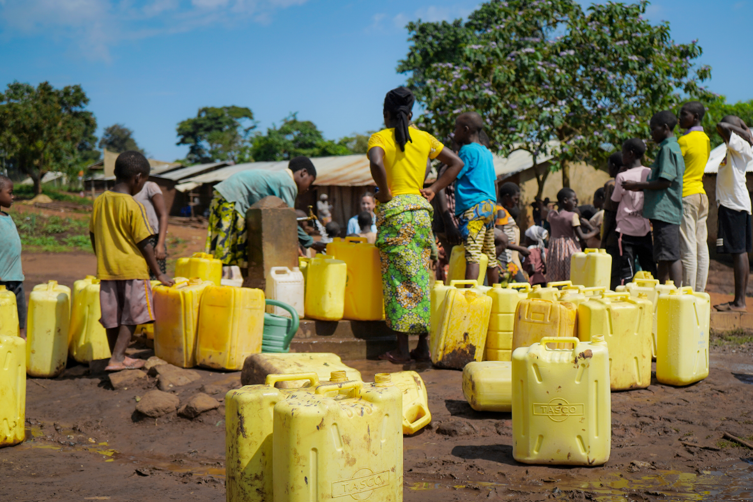
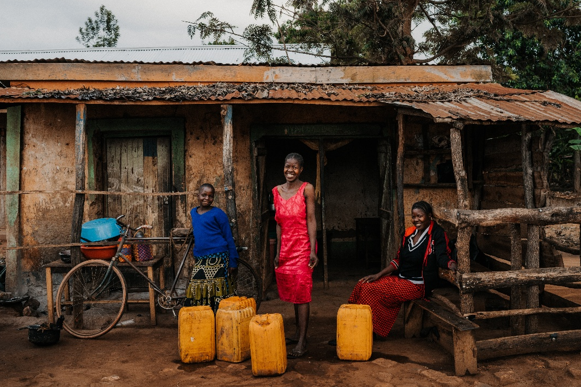
Sphere Water supply Standard 2.1: Access and water quantity (“WASH Standard 2.1”) states that “People have equitable and affordable access to a sufficient quantity of safe water to meet their drinking and domestic needs”. Yet the way in which this outcome is often assessed does not tell us if these needs are being met. Currently, WASH Standard 2.1 is typically measured using supply-side proxies, most notably per capita water provision benchmarks, such as “15 litres per person per day”. While supply-side indicators are useful for planning and system design, they are a poor proxy for whether water is sufficient to meet basic needs. More accurate information about how water shows up in the lives of those in humanitarian settings is needed; the Water Insecurity Experiences (WISE) Scales are a quick, simple, yet rigorous way for doing just that.
Why litres per person per day are not enough
One of the Sphere recommended indicators is the “average volume of water used for drinking and domestic hygiene per household”. The problem is that if this indicator is taken in isolation, it assumes that water quantity captures sufficiency, but in fact, it masks several well-known problems. For one, we know that the amount of water people use in practice depends strongly on the time and effort required to collect it. When water is available on premises, households may use 50–100 litres per person per day, but when collection times exceed 30 minutes, consumption often falls to around 10–15 litres per person per day regardless of the nominal supply volume[1]. In other words, water may technically be available within a system yet still be difficult for households to access in practice because of distance, queueing, restricted hours, or cost. As such, supply-side indicators tell us if/how many inputs were delivered, while failing to show whether Sphere’s intended outcome—sufficiency for people—has been achieved.
In contrast, experiential measures such as the WISE Scales help capture constraints directly by asking households (the HWISE Scale[2]) or individuals (IWISE) whether they have experienced problems obtaining sufficient water for daily needs. They also highlight the impact of water insecurity on daily life, by asking about whether people have gone without drinking water, skipped hygiene practices, or have experienced psycho-emotional problems because of problems with water.
What experiential scales add
The WISE Scales offer a complementary, outcome-focused approach to capturing how water “shows up” in people’s lives[3]. The 12-question and 4-question versions of the WISE Scales have been rigorously validated in a range of settings, and established as valid in Low-, Middle-, and High-Income settings[4]. Rather than estimating sufficiency indirectly, based on quantity of water available or drinking water service ladder, they ask people directly about their experiences with water for consumption (e.g. drinking, cooking), hygiene (e.g., bathing, handwashing), as well as psychosocial dimensions of issues with water (worry, shame, anger). The broad nature of water-related experiences aligns closely with the intent of WASH Standard 2.1.
Because the WISE scales measure experiences rather than volumes, they capture dimensions of sufficiency that litres-per-person indicators cannot. This is an indicator that shows promise at being more sensitive to interruptions, seasonal stress, price shocks, and social inequities within households. Importantly, they allow practitioners to rapidly assess whether water services are working for people, not just whether systems are providing water.
Directly measuring the outcome of interest
From a Sphere perspective, the value of experiential measures is straightforward: they measure the outcome WASH Standard 2.1 is concerned with directly. If people report that they could not meet basic domestic needs, worried about water, or were unable to maintain hygiene, then water sufficiency has not been achieved—regardless of calculated per capita supply. Conversely, where people consistently report no such experiences, this provides strong evidence that services are meeting needs in context.
When used alongside other indicators, WISE data can help explain why a response is or is not meeting standards. For example, a camp may meet design targets for water quantity, yet high WISE scores may reveal problems with queuing, timing of supply, or affordability. Programme teams can then investigate these specific constraints—such as adjusting distribution hours, increasing tap-stand capacity, or reducing user fees—so that monitoring results directly inform operational adjustments.
Alignment with the Core Humanitarian Standard
Experiential indicators also align closely with the Core Humanitarian Standard (CHS). For example, Commitment 4 focuses on participation and Commitment 7 on feedback. Experiential scales help achieve these commitments as they provide a structured, systematic way to incorporate people’s voices into assessment and monitoring, beyond ad hoc complaint mechanisms[5].
While WISE scales are not a substitute for community engagement, they can serve as an initial, concrete step towards more people-centred monitoring and greater accountability. They help normalise the idea that people’s experiences are legitimate evidence of programme performance, a concept that underpins our understanding of accountability.
Equity and differentiated needs
A further strength of experiential scales is their sensitivity to differences within populations, and even within households. Men, women, children, older people, and people with disabilities often experience water access, use, and reliability differently, even within the same household. Supply-side indicators generally cannot detect these differences. WISE data, particularly when collected at the individual level, can reveal systematic disparities linked to gender, age, disability, or caregiving roles. This supports more equitable programming and strengthens alignment with Sphere’s cross-cutting commitments on inclusion and dignity.
Using WISE scales in practice
The WISE scales are not intended to replace technical water supply indicators. Rather, they complement them by filling a critical gap: measuring whether water is sufficient as experienced by people. For practitioners working to meet WASH Standard 2.1, their integration offers a more complete picture—linking system performance to human outcomes—with relatively little investment of time, training, or other resources.

Validated versions of the scales can be implemented quickly. The 12-item scale takes roughly three minutes to establish four levels of water insecurity, and there is 4-item version suitable for rapid assessment, including by telephone. This makes them feasible in emergency contexts where time and enumerator capacity are limited, and where rapid feedback on outcomes is essential for course correction.
They are also ready for broad implementation. The WISE Scales have been translated into nearly 100 languages, and in-depth guidance is currently available in four languages, with plans for additional translations and interactive training materials to be hosted by the United Nations University by late 2026. Finally, the modules have already been programmed into tools like RedCap, Kobo Toolbox, and MWater, which further facilitates implementation, and code has been written to facilitate both analysis and presentation.
By integrating WISE scales into assessments and monitoring frameworks, actors can move closer to what Sphere ultimately asks of us: not just to deliver water, but to ensure that people can live with dignity because their water needs are being met.
Contact the authors: james@james-elliot.co.uk, sera.young@northwestern.edu
[1] Howard G, Bartam J, Williams A, Overbo A, Fuente D, Geere JA. Domestic water quantity, service level and health, second edition. Geneva: World Health Organization; 2020. Licence: CC BY-NC-SA 3.0 IGO. https://iris.who.int/server/api/core/bitstreams/ca623971-c9ee-4a72-9f60-f2a389ffb5c7/content
[2] Young SL, Boateng GO, Jamaluddine Z, Miller JD, Frongillo EA, Neilands TB, et al. The Household Water Insecurity Experiences (HWISE) Scale: development and validation of a household water insecurity measure for low-income and middle-income countries. BMJ Global Health. 2019;4:e001750. https://doi.org/10.1136/bmjgh-2019-001750
[3] Young S, Frongillo E, Jamaluddine Z. Perspective: The Importance of Water Security for Ensuring Food Security, Good Nutrition, and Well-being Advances in Nutrition, 12, 1058-1073. https://advances.nutrition.org/article/S2161-8313(22)00155-7/fulltext
[4] Young, S.L., Miller, J.D., Bose, I. et al. The Water Insecurity Experiences (WISE) Scales are suitable for use in high-income settings: findings from cognitive interviews and nationally representative surveys. Int J Equity Health 24, 338 (2025). https://doi.org/10.1186/s12939-025-02686-x
[5] Miller JD, Vonk J, Brogan J, Barstow C, Miller SM, Staddon C, et al. (2025) The utility of experiential water insecurity measures for monitoring and evaluating WASH programs: Case studies from Nepal and Sierra Leone. PLOS Water 4(7): e0000395. https://doi.org/10.1371/journal.pwat.0000395