Français
 Español
 English
 العربية
 Login
Login
 Donate












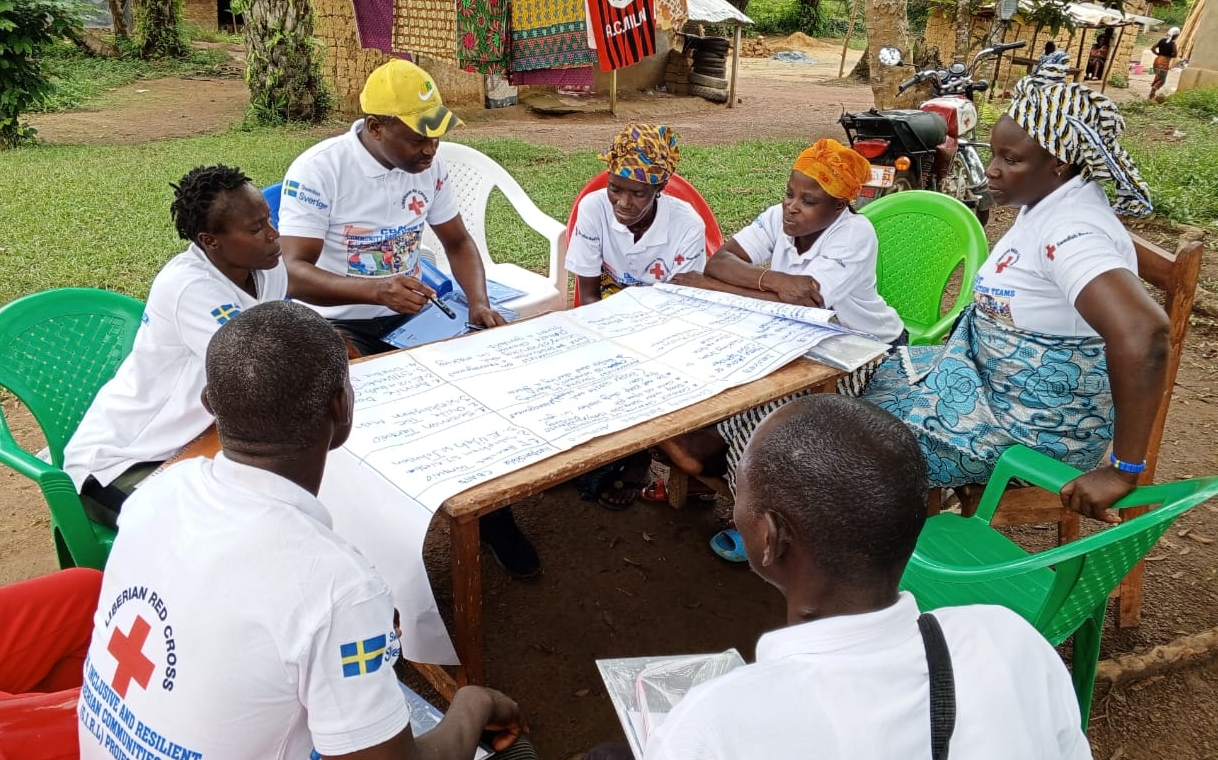
By LSE Consultancy Team, 2025–2026: Marcella Arena, Bridget Bilger and Johannes Davies
Humanitarian work is, at its core, about accountability. Accountability to the people affected by crises, to the principles that guide the sector, and to the standards that give those principles operational form. Sphere sits at the heart of that effort, supporting a global community of practice active in around a hundred countries and bringing together 90 Focal Points, 50 member organisations and over 180 listed trainers.
A recurring need identified through network consultation was for a self-assessment tool to help humanitarian organisations improve their systemic alignment with Sphere principles and standards. In response, Sphere worked with us, a consultancy team of students at the London School of Economics, to research, design, develop and pilot a tool.
The scope and foundational principles of the tool were defined by Sphere from the outset, reflecting its commitment to reaching as many people as possible. The tool had to be openly accessible, with the lowest possible barrier to use. It had to be voluntary, supporting internal improvement rather than functioning as an external verification or audit mechanism. It needed scope flexibility, allowing organisations to assess themselves across the foundational Sphere chapters in ways that matched their context and capacity. And it had to be globally applicable, designed to be used meaningfully by any organisation regardless of size, geography or operational setting.

How we built it
Before designing anything, we needed to understand what already existed. In the first phase, we conducted a systematic desk review of twelve self-assessment and verification mechanisms across five typologies, including humanitarian partner standards, donor verification tools and ethical trade frameworks. This gave us a rigorous foundation: what structures tend to work, how scoring is typically handled, and what governance models underpin similar tools.
But no desk review can tell you what users actually need. In the second phase, we conducted semi-structured stakeholder interviews with a diverse cross-section of the Sphere network to understand how the tool could best support them.
Speaking with practitioners about their daily realities, the pressures they navigate, the ways they already try to assess their own work, and what a genuinely useful tool would look like produced insights that no amount of reading could have generated. Their voices, priorities and healthy scepticism about tools that look good on paper but fail in practice shaped every design decision that followed.
With that foundation in place, the third phase focused on design and development. The question bank was drawn directly from the Sphere Handbook to ensure every question genuinely measures alignment with Sphere’s own standards. In the fourth and final phase, the tool was piloted with a selected group of organisations and an external consultant, and their feedback informed concrete refinements to the content, structure, scoring logic and accompanying guidance.
What the tool does
The final self-assessment tool gives projects and organisations a structured way to reflect on their current alignment and identify where they want to engage further. It is ultimately about improvement, not audit: scores are a starting point for conversation and internal action.
Modularity is a key design principle for accessibility. Organisations can engage at the organisational level, the project level, or both, and can begin wherever is most relevant to their current context. There is no obligation to complete everything at once. This was a direct response to stakeholder feedback that an overly burdensome and prescriptive tool will not be used. The modular structure means an organisation with limited time and capacity can still engage meaningfully and build from there.
Two formats were developed to meet the practical diversity of the network. An Excel version with integrated dashboards allows organisations to track and visualise their scores over time. A fillable PDF offers a lighter alternative, better suited to contexts where sophisticated digital tools are less accessible. A process guide accompanies both versions, documenting the tool’s structure and supporting implementation across organisations of varying sizes and operational contexts.
The tensions we navigated
Building this tool meant making real choices between competing goods. Being transparent about those choices helps explain why the tool looks the way it does and invites the community to continue refining it as it meets new contexts.
The most fundamental tension was between simplicity and comprehensiveness. A tool too complex to complete will not be used; a tool too shallow will not be useful. We heard both imperatives directly from stakeholders, sometimes from the same person. The modular structure is our answer: organisations can engage as deeply or lightly as their capacity allows, without the tool losing its integrity at either end.
A related tension emerged around voluntary self-assessment and the reality of donor pressure. Many practitioners told us they would value a tool for genuine internal reflection; others noted that demonstrating Sphere alignment to donors is an unavoidable part of organisational life. We designed primarily for the former, while acknowledging the latter as a legitimate secondary use.
Practitioners also pushed us to think about the tool’s educational function. For many people, particularly those newer to Sphere, the process of working through the tool is itself a learning experience—a way of deepening understanding of what the standards actually require rather than just measuring against technical indicators. This dual function of assessment and education is embedded in the design.
Evidence rigour and usability pulled in different directions as well. Some standards lend themselves to quantitative scoring; others are inherently narrative and cannot be meaningfully reduced to a number. The tool accommodates both, pushing users to reflect on their systems and practices holistically through evidence prompts and narrative justifications while also offering a way to quantitatively track alignment through scores.
Finally, there was the question of global standards and local flexibility. Sphere standards are universal, but the contexts in which they are applied are not. The tool is designed to prompt organisations to read their alignment through the lens of their specific operational environment, not as a departure from the standards but as a more honest application of them.
A first step, and an invitation
We are handing over a foundation. Sphere will continue testing and developing the tool with organisations across the network, and it is through that ongoing use that it will become what it has the potential to be. The tool is a living resource that grows more useful as more people engage with it, push back on it and adapt it to contexts we could not have anticipated.
This has been one of the most meaningful pieces of work we have undertaken as students at LSE. We believe we have built a solid and thoughtful base, grounded in the community’s expressed needs and in the standards that the Sphere Handbook represents. But we also know that the real test is in how the tool is used and the value it offers to the practitioners, trainers and network members who will put it to work.
Thank you to everyone who participated for their immense generosity of time, ideas and feedback, and to the Sphere team who trusted us with this project. This tool belongs to the community that inspired it. We hope it serves you well.
Sphere would like to sincerely thank the LSE Consultancy Team – Marcella Arena, Bridget Bilger and Johannes Davies – for their dedication, professionalism and thoughtful work in researching, designing and piloting the self-assessment tool. Their contribution has laid a strong foundation for the next stage of this work, and we are grateful for their collaboration throughout the project.