Français
 Español
 English
 العربية
 Login
Login
 Donate












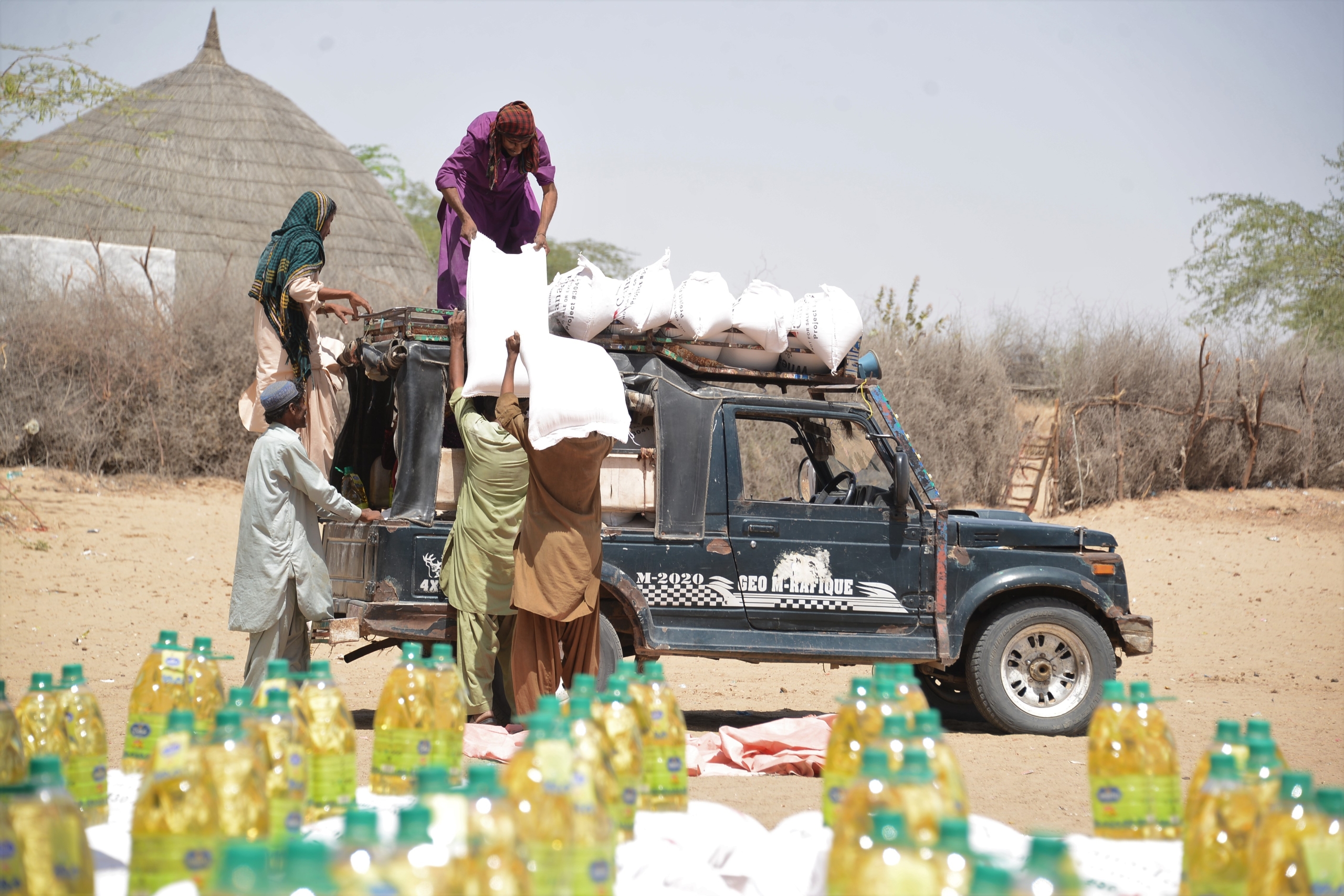
Humanitarian response depends on systems that are interconnected, fast-moving, and operationally complex. Logistics sits at the centre – determining how quickly, effectively, and accountably assistance reaches people in crisis.
Sphere and IECAH’s (Institute of Studies on Conflicts and Humanitarian Action) collaboration reflects a shared effort to bring greater clarity, consistency, and practical relevance to logistics across the sector.
This partnership is reflected in two developments: the inclusion of the Universal Logistics Standards (ULS) in the Humanitarian Standards Partnership (HSP), and a new staff hosting arrangement.
The Universal Logistics Standards and the Humanitarian Standards Partnership
Developed by IECAH within the INSPIRE + Consortium, with the support from DG ECHO and contributions from a wide range of practitioners and technical experts, through a broad, sector-wide consultation process, the Universal Logistics Standards (ULS) define a shared framework for what good humanitarian logistics should look like in practice.

Rather than functioning as a technical manual, the ULS set out minimum qualitative standards for humanitarian supply chains and logistics systems. These are designed to ensure that logistics functions support effective, timely, and accountable response, grounded in humanitarian principles and protection considerations.
Each standard is supported by actions, indicators, and guidance notes, enabling organisations to apply them in ways that reflect their operational realities – from local responders to international agencies working in complex environments.
Their inclusion in the Humanitarian Standards Partnership reflects a shared recognition that logistics is not a back-end function, but a core part of how humanitarian response works.
William Anderson, Executive Director at Sphere, reflects on the significance of the ULS within the HSP and what they bring in terms of shared expectations for humanitarian logistics practice across the sector.
“The inclusion of the Universal Logistics Standards is a major step forward for the partnership. Logistics is the backbone of humanitarian response, yet it has long lacked a shared normative framework within the HSP. These standards change that, bringing clarity, consistency, and accountability to how aid is procured, moved, and delivered. They translate humanitarian principles into practical, measurable actions that organisations of all sizes can apply in real-world contexts. By strengthening efficiency, transparency, and coordination across the sector, ULS not only complements the existing standards but significantly enhances the overall impact and coherence of the partnership.”
Why logistics standards matter now
Humanitarian logistics has become more demanding in recent years.
Supply chains are fragile, crises are interconnected, and operational environments are often constrained by access, infrastructure, and security challenges. At the same time, expectations around accountability, efficiency, and coordination continue to grow.

In this context, shared standards help the sector align around what “good” looks like – not by standardising operations, but by strengthening consistency in principles, expectations, and quality.
Camille Nussbaum, Executive Coordinator at IECAH, reflects on what this shift means for the wider humanitarian logistics space and how being part of a shared standards framework helps strengthen common understanding while still respecting operational realities.
“At a time when the humanitarian sector is being redrawn – by tighter budgets, accelerating crises and a renewed call for localisation – logistics is no longer a back-office function. It is the discipline that decides whether assistance reaches people in time, in the right way and with dignity. The Universal Logistics Standards give the sector a common, voluntary reference for quality and accountability across the supply chain: a shared baseline that organisations of any size can adopt, adapt to their context and use to raise the floor of what is possible.”
The ULS contribute to this by bringing together existing good practice into a structured, flexible framework that can be adapted across very different contexts.
María González, Technical Assistance and Research Officer at IECAH, adds a perspective on collaboration across standards and what it means to work more closely within a shared space:
“The ULS, and humanitarian standards more broadly, offer a valuable opportunity to establish a common baseline across organisations, while supporting those still developing their systems and capacities to strengthen their capabilities. Engaging with these standards helps organisations align their practices and reinforces that humanitarian action is not simply about delivering aid, but about doing so with quality, accountability, and with affected populations at the centre.”
Deepening collaboration between Sphere and IECAH
Sphere is very grateful to IECAH for hosting our new Sphere Handbook Revision Project Manager, Andrea Espinosa, who will oversee the revision process – ensuring that this complex global effort – involving dozens of core contributors, hundreds of experts, and thousands of practitioners – remains structured, inclusive, and on track.
It is a role that requires more than project management alone. It demands the ability to work across complexity, navigate diverse perspectives, identify tensions, and create space for dialogue in ways that are neutral, clear, and inclusive.
This arrangement reflects a practical expression of partnership, strengthening how the two organisations work together and how humanitarian standards are supported and maintained.
This collaboration reflects a broader shift across the humanitarian sector: recognising that logistics is not only about moving goods, but about enabling timely, accountable, and dignified assistance.
By bringing the Universal Logistics Standards into the Humanitarian Standards Partnership, Sphere and IECAH are helping to strengthen a shared understanding of quality – one that connects systems, standards, and practice, and ultimately supports better outcomes for people affected by crisis.