Français
 Español
 English
 العربية
 Login
Login
 Donate












What does it take for humanitarian standards to truly work in context?
In the Democratic Republic of Congo (DRC), the Ebola virus is devastating communities already facing conflict, hunger, displacement and limited healthcare. In this context standards like Sphere and the Core Humanitarian Standard (CHS) are essential. But how do global standards translate into day-to-day decisions, in local languages, in different cultures?
Through the H2H Fund Activation, Sphere is working in partnership with Data Friendly Space, RedR UK, CONAFOHD and Sphere focal points in DRC and Rwanda to ensure these standards are not only available, but meaningful and usable in practice.
Jonas Habimana, Sphere trainer and focal point representative of BIFERD is leading the contextualisation work in DRC.
Rather than adapting content from a distance, this work is grounded in the experience of Jonas and his colleagues. It asks practical questions: Do the examples reflect what field teams face? Are the concepts clear in the local context? Can practitioners apply what they learn?
This became particularly evident during a webinar organised by Jonas in early July, which brought together colleagues from DRC to discuss how Sphere standards are applied in the context of the Ebola response.
Jonas reported that:
“Participants from the field explained how lack of trust and community resistance is a big problem. Access to basics like safe drinking water is also a challenge in affected areas, and many people admitted to hospitals and treatment centres, or quarantining at home, just don’t have enough to eat. There is also a need for greater hygiene promotion – inadequate quarantine areas mean that many people are accommodated without appropriate preventive measures.”
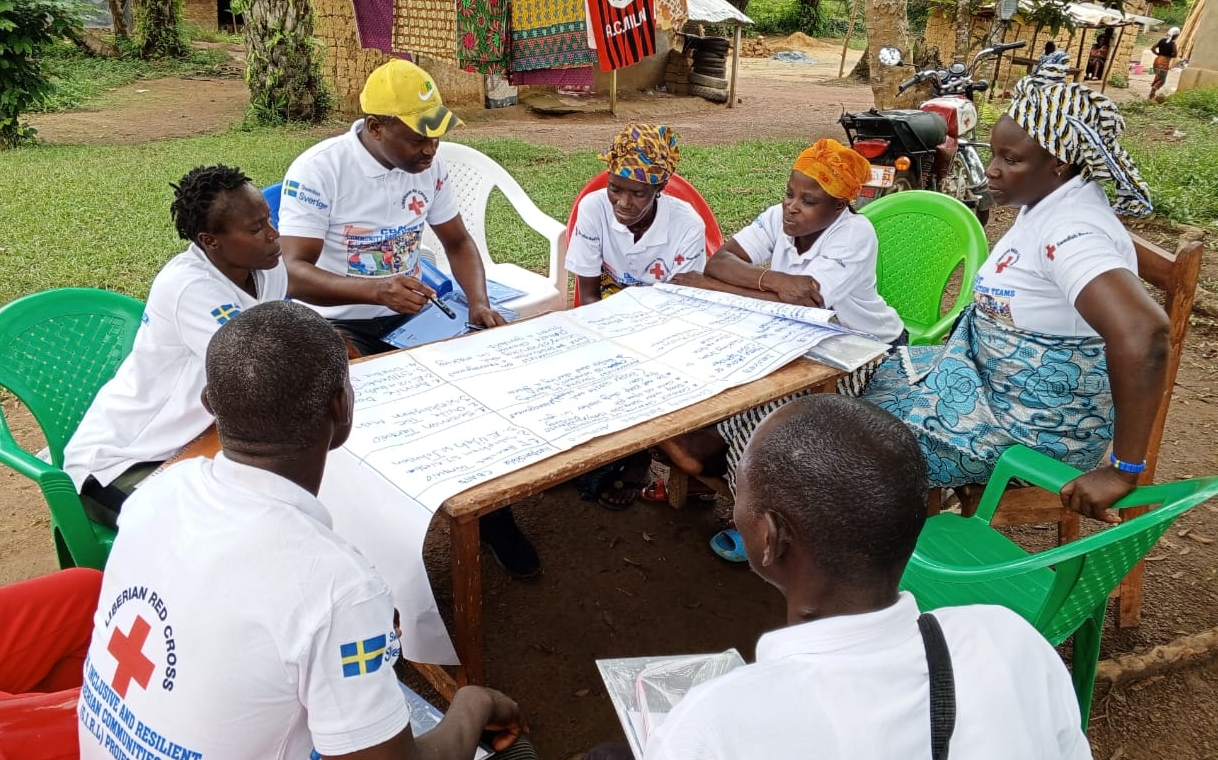
Alongside this work, Symphorien A. Bikubusyo, Sphere focal point representative of Global Humanitarian Disaster Consulting Institute (GHDCI), is supporting the translation process, working with local translators to provide clear and accessible learning materials in Lingala and Congo Swahili.
The result is a set of learning materials, such as the Sphere Friendly Guide in Lingala and Congo Swahili, as well as online trainings, that speak more directly to practitioners – not as abstract guidance, but as tools that can support real decisions in real contexts. The new materials will be available on a digital learning platform, to be hosted by CONAFODH – DRC’s NGO forum.

Felicity Fallon, Sphere’s Engagement Director emphasises that this approach is about more than producing materials – it is about strengthening humanitarian response.
“If humanitarian guidance is in people’s own language, adapted to their culture and they are involved in shaping it themselves then they are much more likely to use it, and more lives will be saved”.
By placing local knowledge, language and experience at the centre of the process, this initiative demonstrates that contextualisation is not simply about adapting guidance. It is about ensuring humanitarian standards remain practical, relevant and effective for the people applying them where they are needed the most.